Skip to content
The Vibe Shift: Why Your Next MVP Won’t Be Coded, It’ll Be Summoned
Let’s be honest, the term “vibe coding” sounds like something cooked up in a Silicon Valley marketing meeting. It’s a little bit cringe, a little bit “hello, fellow kids.” But behind the buzzword is a seismic shift in how we think about building software. And at Coderfy, we’re not just observing this shift; we’re on the front lines, witnessing how it’s changing the very nature of MVP and PoC development.
The generic articles will tell you that vibe coding is about using AI to write code. That’s like saying a rock concert is about plugging in a guitar. It misses the point entirely.
Vibe coding is about translating human intent into digital reality with the least possible friction. It’s about having a conversation with a machine that understands not just your words, but your vision. It’s about a future where the bottleneck to innovation is no longer your ability to write perfect syntax, but your ability to clearly articulate what you want to create.
What is Vibe Coding? A Symphony of Intuition and AI
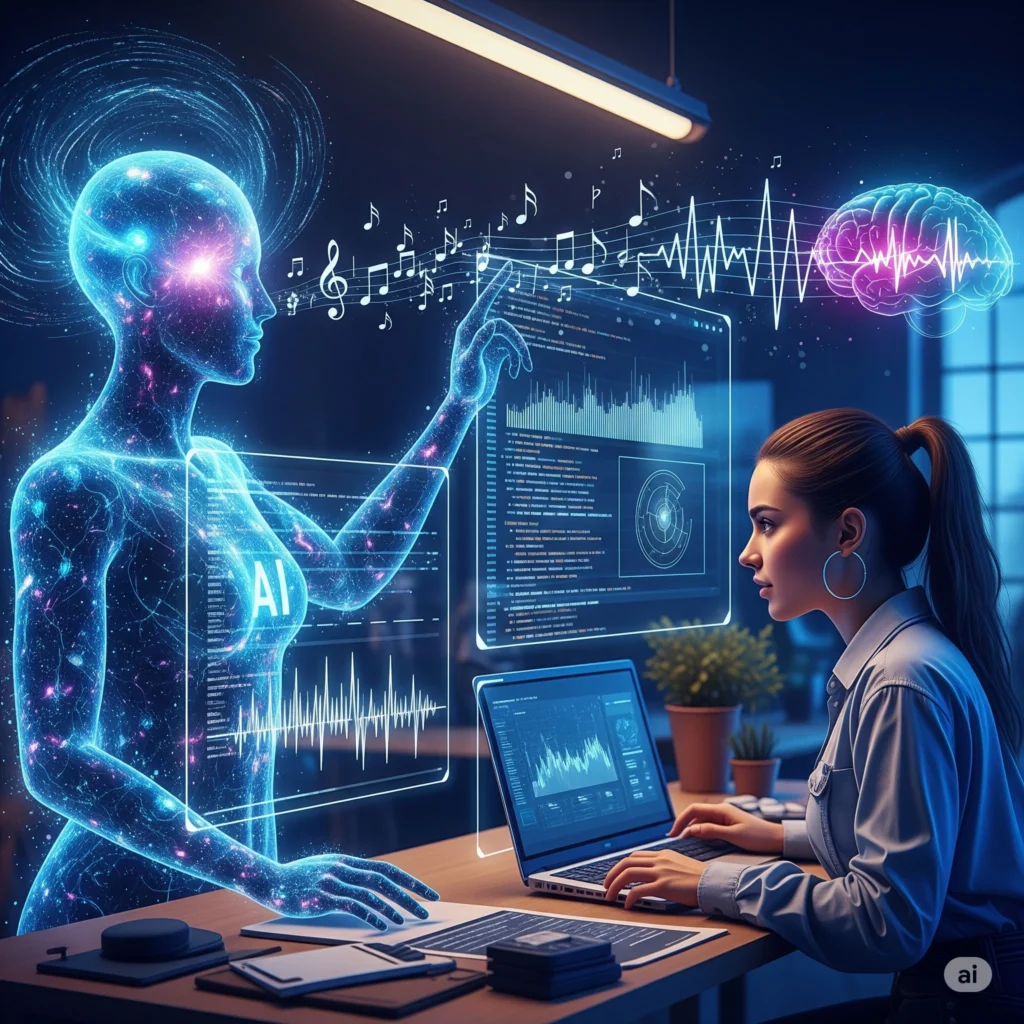
At its core, vibe coding is the art of developing software by describing your vision in natural language and letting artificial intelligence, specifically Large Language Models (LLMs), translate that “vibe” into functional code. The developer’s role evolves from a meticulous scribe, typing out every line of syntax, to a creative director, guiding the AI, testing its output, and refining the final product.
Think of it as a conversation. You express your intent, and the AI, your tireless and knowledgeable partner, brings it to life. This synergy between human creativity and machine efficiency is the engine of vibe coding.
The Allure and the Alarms: The Two Sides of the Vibe
The appeal of vibe coding is undeniable, especially in the early stages of product development. The benefits include:
Unprecedented Speed: The ability to go from a fleeting idea to a functional prototype in a matter of hours, not weeks, is a game-changer. This acceleration is a dream come true for startups and innovators eager to test their hypotheses.
Democratization of Development: Vibe coding empowers those with the vision, not just those with the coding expertise. Entrepreneurs, designers, and domain experts can now actively participate in the creation process.
Rapid Iteration: The “build-measure-learn” feedback loop, a cornerstone of agile development, is supercharged. You can quickly gather user feedback, make adjustments, and redeploy, fostering a culture of continuous improvement.
However, where there is great power, there is also great responsibility. The potential pitfalls of vibe coding cannot be ignored:
The Specter of Technical Debt: In the race to build quickly, it’s easy to accumulate messy, inefficient, and hard-to-maintain code. This “technical debt” can cripple a project in the long run.
Security and Quality Concerns: If not properly vetted, AI-generated code can introduce security vulnerabilities and bugs. A “mostly works” approach is not good enough for a product with real users.
The “Black Box” Problem: Over-reliance on AI can lead to a disconnect between the development team and the codebase, making debugging and future enhancements a nightmare.
The Sweet Spot: Vibe Coding for MVP and PoC Development
This is where the magic truly happens. Vibe coding’s characteristics make it the perfect tool for crafting MVPs and PoCs. The goal of these initial development stages is not to build a perfect, feature-complete product but to validate an idea and gather feedback as quickly and efficiently as possible.
With vibe coding, you can:
Build a PoC in record time to demonstrate the technical feasibility of your concept to stakeholders and investors.
Develop an MVP with core functionalities to get your product in the hands of early adopters and start learning from their behavior.
Test multiple hypotheses without investing significant time and resources in full-scale development.
At Coderfy, we’ve seen a surge in requests for exactly this – clients who have a brilliant idea and want to see it come to life, to test its viability in the real world. When wielded correctly, Vibe coding is the most powerful tool in our arsenal for this purpose.
From Vibe to Viable: The Coderfy Approach
The key to successful vibe-driven development is balance. It’s about harnessing the speed and creativity of vibe coding while mitigating its risks. This is where the expertise of a seasoned development partner like Coderfy becomes invaluable.
Our approach is simple:
Embrace the Vibe: We start by working closely with you to understand your vision, your “vibe.” We use AI-powered tools to rapidly prototype and build the initial framework of your MVP or PoC.
Inject the Expertise: Our experienced developers then step in to review, refine, and fortify the AI-generated code. We ensure that it is secure, efficient, and scalable.
Bridge the Gap: We transform the “vibe” into a “viable” product. We bridge the gap between a quick prototype and a solid foundation for your future application. We manage the technical debt, ensure the code is clean and well-documented, and set you up for long-term success.
From Abstract to Actual: The Coderfy PoV
So, how does this play out in the real world? Let me give you a couple of recent (and slightly anonymized) examples from the trenches at Coderfy:
The “Tinder for Foodies” App: A client came to us with a brilliant, but half-formed, idea for an app that would match users with restaurants based on their “culinary vibe.” Instead of spending weeks on a detailed spec, we spent a few hours in a “vibe session.” We talked about the feeling they wanted to evoke, the kind of user they were targeting, and the core “magic” of the experience. We fed this conversation into our toolchain, and by the end of the day, we had a clickable prototype. It wasn’t perfect, but it was real. The client could see their vibe, in their hands. That’s the power of this new way of working.
The Logistics Nightmare Solver: Another client, in the decidedly less glamorous world of logistics, needed a PoC for an internal tool to optimize delivery routes. The problem was complex, with a dozen variables and a mountain of legacy data. Traditionally, this would have been a month-long project just to prove the concept. Instead, we used a vibe-driven approach. We described the problem to our AI partner, fed it the data, and asked it to find a solution. It came back with a functional algorithm in a fraction of the time. We then had our human experts refine and harden it, but the initial creative leap, the “aha!” moment, was a collaboration between man and machine.
In both cases, the “vibe” was the starting point, not an afterthought. We didn’t build a product and then try to slap a vibe on it. We started with the vibe and built a product around it.
The Inconvenient Truth About Vibe Coding
Now, this all sounds very utopian, I know. And if you’re a developer, you might be rolling your eyes right now. “What about code quality? What about security? What about technical debt?”
You’re right to be skeptical. In its raw form, Vibe-generated code is often a beautiful, chaotic mess. It’s a first draft, a sketch, a burst of inspiration. It is not, I repeat, not a finished product.
The real skill in this new paradigm isn’t just about prompting an AI. It’s about knowing how to take that raw, vibe-generated output and turn it into something robust, scalable, and secure. It’s about being the editor, the curator, the architect who can see the genius in the chaos and give it structure.
This is why the demand for traditional developers isn’t going away. It’s evolving. The future belongs to those who can bridge the gap between the vibe and the viable.
Your Vibe, Our Expertise
So, why is this all so important for Coderfy and our clients? Because it allows us to focus on what really matters in the early stages of a project: speed, learning, and validation.
The old model of MVP development was a slow, expensive bet. You’d spend months and tens of thousands of dollars to build a product, only to find out that nobody wanted it.
The new model is a series of small, fast, and cheap experiments. It’s about getting your vibe out into the world, seeing how people react, and iterating based on real-world feedback.
This is the future of innovation, and we’re incredibly excited to be a part of it.
If you have a vibe or an idea that keeps you up at night, let’s talk. We’ll help you turn it into something real.