Custom CRM vs. Off-the-Shelf: The Brutal Truth About Cost, Control, and Hidden Traps

You’re at a crossroads. Your business lives and dies by the quality of your customer relationships, and you know that the right Customer Relationship Management (CRM) system is not just software—it’s a strategic asset. The choice you make will echo in your sales figures, marketing impact, and operational agility for years to come.

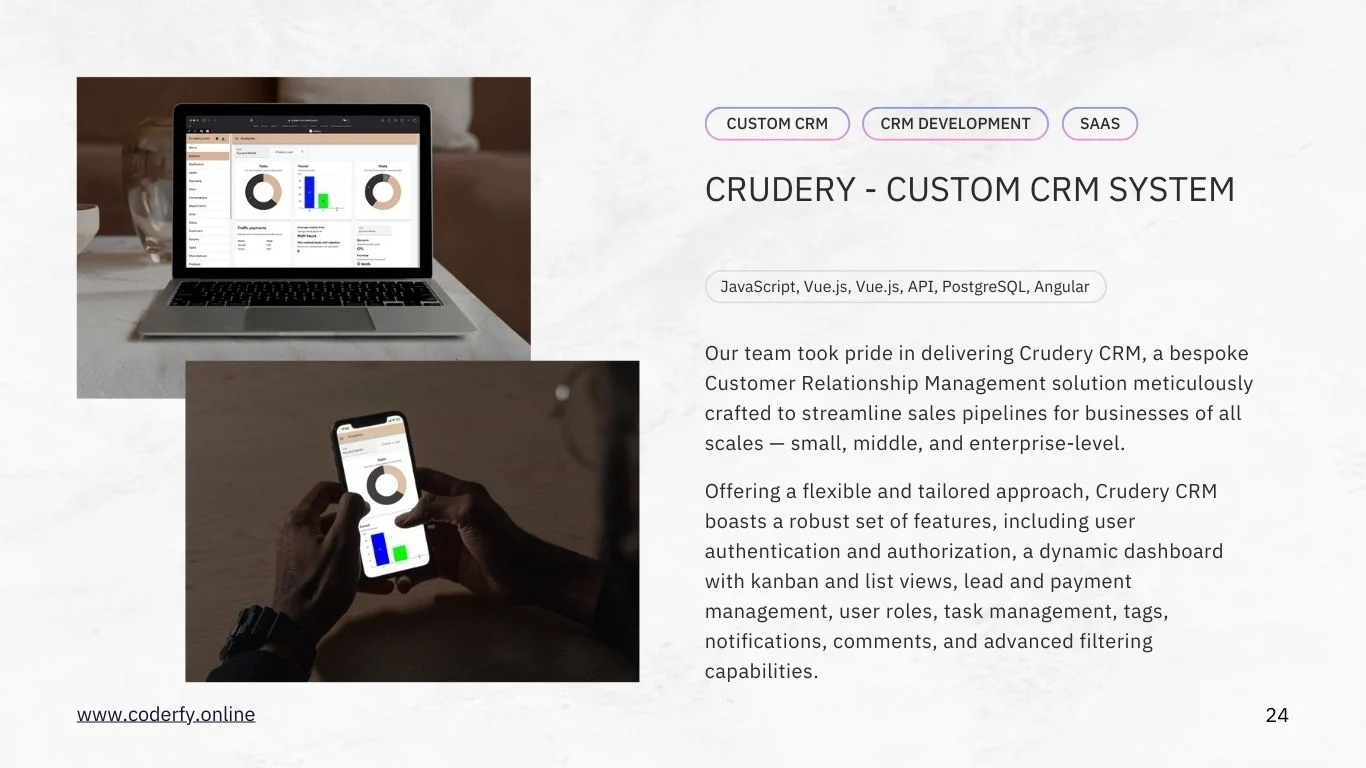
Custom CRM vs Off-the-shelf - when we built those and know what we are talking about

In this article

Share this article on:
The market presents you with two fundamentally different paths:
  1. The “One Box” Promise: An off-the-shelf, ready-made solution that promises speed and a wealth of standardized features.
  2. The Custom-Built Fortress: A bespoke CRM, engineered from the ground up to match your unique business DNA, often built upon your existing ERP.
This isn’t just a technical choice; it’s a strategic one. One path offers immediate deployment, the other offers complete ownership. One relies on a vendor’s vision, the other is forged from your own.
Let’s cut through the marketing noise and analyze the raw numbers, the hidden risks, and the long-term value of each path. This is the discovery and research you must do before investing a single dollar.

The Seductive Promise of “Ready-Made” CRM: What’s Really in the Box?

Off-the-shelf solutions like One Box CRM are tempting. They are comprehensive, user-friendly platforms designed to automate processes and boost sales. They boast about “high customizability” and extensive integration capabilities.
But here’s where you need to read the fine print.
The “AS IS” Disclaimer: The First Red Flag
A critical detail often buried in the terms is the “AS IS” clause. One Box is provided “AS IS,” meaning claims regarding its suitability for your specific business tasks are not accepted. This isn’t a “ready-to-use solution” for every need.
This fundamentally shifts the responsibility for ensuring the software’s fitness for your needs from the vendor to you. If it doesn’t do what you need it to, that’s your problem to solve—and pay for.

The Partner Dependency Trap

How do you solve those problems? With partners. One Box “does not provide any services or advice directly”. All implementation, setup, refinements, and customer support are handled exclusively by third-party partners.
This creates a fragmented support model and a potential “partner lock-in” that can dramatically inflate your total cost of ownership.
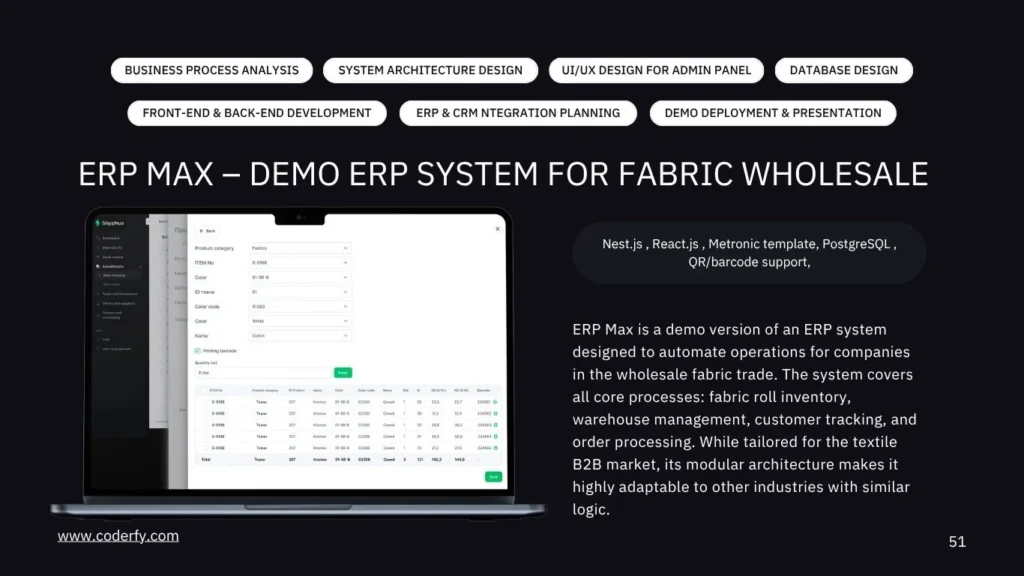
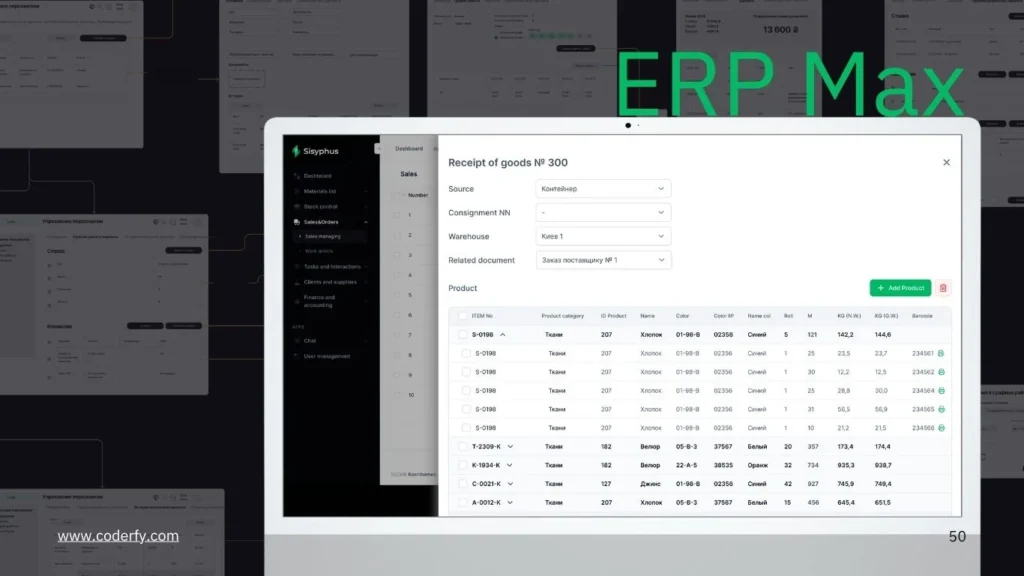
Demo ERP System for Fabric Wholesale and custom CRM

Case Study: When “One-Size-Fits-All” Fits No One

Before we discuss the numbers, let’s consider a real-world scenario in which an off-the-shelf CRM would crumble. Imagine a business that specializes in office equipment maintenance. Their entire operation revolves around a unique workflow:
  • A client submits a service request for a broken printer.
  • The system must identify the client, their location, and their specific equipment model.
  • A technician must be assigned based on availability and proximity.
  • The technician needs access to the machine’s service history and a real-time spare parts inventory.
  • After the repair, an invoice is automatically generated, and the spare part inventory is updated.
Can a standard, sales-focused CRM handle this? Not without extensive, costly, and often clunky modifications. You’d be forcing a square peg into a round hole. This is a classic case where the business process is the competitive advantage. A custom CRM for equipment maintenance isn’t a luxury; it’s the central nervous system of the entire operation. It’s built to master this specific workflow, not just accommodate it. This is the fundamental question: Is your business process standard, or is it your secret sauce? If it’s the latter, you’re already on the path to a custom solution.

The Real Cost of a “Boxed” Solution

The sticker price is never the final price. Let’s break down the true cost of implementing an off-the-shelf solution for a hypothetical team of 50 users.
Cost Category Estimated Range ($) The Hard Truth / Basis
Annual Licensing $9,950 – $18,000 Based on $29-$30/user/month (Cloud) or $199/user/year (Boxed, after year 1). This is your recurring ticket to ride.
Initial Setup Fee $299 – $999+ These are just the “from” prices to get you in the door. The real work costs more.
Implementation & Customization (Partner Fees) $30,000 – $125,000+ This is where the budget explodes. “Customization” requires partner development to overcome the “AS IS” limitations.
Data Migration $1,800 – $10,000+ Getting your existing data into the new system is a critical, often underestimated, project.
User Training $500 – $15,000+ The “up to 30 support hours” included won’t cut it. Proper training is a separate, significant investment.
Hidden Costs $5,500 – $22,000+ Includes annual partner support fees ($2.5k-$10k) and lost productivity during setup ($3k-$12k).
Total Upfront Costs ~$38,700 – $170,000+ Excluding your annual license fee.
Total Annual Recurring Costs ~$20,000 – $38,000+ Includes licensing and mandatory ongoing partner support.
Suddenly, the “affordable” off-the-shelf option looks a lot more like a long-term financial commitment with significant upfront costs and reliance on third parties.

Building Your Fortress: The Power and Peril of a Custom CRM System

The alternative is to forge your own path: develop a custom CRM system. This approach is about creating a proprietary strategic asset, not just renting a tool.

The Strategic Advantages of Ownership

Why endure the higher upfront cost and longer development time?
  • Perfect Fit: The system is meticulously engineered to your exact workflows. You don’t adapt your process to the software; the software is built for your process.
  • Complete Ownership: You own the intellectual property. There are no recurring license fees, and no vendor can change features or pricing on a whim. This is strategic independence.
  • Competitive Moat: You can embed your unique sales methodologies and proprietary logic directly into the system. This is something your competitors cannot replicate with a boxed solution.
  • Seamless Integration: A custom CRM can be designed for flawless, deep integration with your core systems, like an ERP, creating a unified operational backbone that eliminates data silos.

Budgeting for a Custom Build: A Realistic Look

This table breaks down the typical modules and estimated hours for a comprehensive custom CRM project. This is not a guess; this is based on data from actual build estimates.
Module / Task Estimated Hours Why It’s Essential
Phase 1: Foundation & Core Logic
Project Setup & Architecture 20 – 40 Building the strong foundation to prevent future cracks (technical debt).
User Roles & Permissions 70 – 120 Critical for security and ensuring team members only see relevant data.
Client & Lead Management 120 – 250 The “C” in CRM. The core database of your customers and prospects.
Phase 2: Operational Modules
Sales Funnel / Pipeline 80 – 160 Visualizing and managing your sales process from lead to close.
Calendar & Task Management 60 – 130 Automating schedules, reminders, and follow-ups for your team.
Phase 3: Automation & Integration
Custom Reporting & Dashboards 90 – 200+ Translating raw data into actionable business intelligence.
Notifications System (Email/SMS) 40 – 80 Real-time alerts for new leads, completed tasks, and important events.
3rd Party Integrations (API) 50 – 300+ Connecting your CRM to other essential tools (e.g., telephony, email marketing, accounting software).
Project Overheads
Project Management 200 – 400 The captain of the ship, ensuring the project stays on time and on budget.
Quality Assurance (Testing) 300 – 600 Meticulously finding and fixing bugs before they impact your business.
Total Estimated Hours ~1,030 – 2,280+ A realistic range for a robust, business-ready custom CRM system.
Disclaimer: These hours are illustrative, based on provided estimates. Your final cost will depend on your specific feature set and the agreed-upon hourly rate with your development partner.
Head-to-Head: The 5-Year Total Cost of Ownership (TCO)
Let’s put the numbers side-by-side. The initial price tag is misleading. What matters is the TCO over 3-5 years.
  • One Box (Off-the-Shelf): While initial costs are lower, the recurring licensing and partner support fees accumulate relentlessly. For a 50-user team, you could easily spend $100,000 – $190,000+ over 5 years in just recurring fees, on top of the significant upfront implementation costs.
  • Custom CRM: The high initial investment is the bulk of the cost. While you must budget for ongoing maintenance and hosting ($16,200 – $80,000+ annually), you are free from per-user licensing fees. Research suggests a custom CRM can achieve payback in 10-16 months compared to a SaaS solution with high monthly costs.
The financial verdict: A boxed solution is a continuous operational expense. A custom solution is a capital investment that can yield a greater long-term return.

The Verdict: How to Make Your Choice

The decision isn’t purely financial. It hinges on your company’s DNA, your strategic goals, and your tolerance for risk. Choose an Off-the-Shelf Solution (like One Box) IF:
  • Your business processes are standard and fit well within a boxed model.
  • Your initial budget is strictly limited, and you can’t afford the upfront capital investment.
  • You are prepared to budget for significant partner fees for any real customization and ongoing support.
  • Speed of initial deployment is your absolute highest priority.
Choose a Custom CRM System IF:
  • Your business processes are unique and are a source of your competitive advantage.
  • You have high integration requirements with an existing ERP or other core systems.
  • You have the capital for a significant upfront investment and view this as building a long-term strategic asset.
  • You are committed to robust project management to mitigate risks like scope creep and technical debt.
Ultimately, the choice is between renting a space that is mostly right and building your own fortress, designed for total control and long-term victory.

The MVP Strategy: How to Build a Custom CRM Without a Blank Check

Seeing a four-figure hour count can be intimidating. However, an innovative custom development project must not be an “all or nothing” monolith. The solution is the Minimum Viable Product (MVP) approach.

An MVP isn’t a weak or incomplete version of your software. It is the leanest, most essential version of your CRM that can solve your #1 business problem and be used by real users.

Here’s how it works:

  • Identify the Core Pain: Instead of listing 100 features, you identify the single most critical workflow you need to fix right now. For our maintenance company, that might be just the service request and technician dispatching system.

  • Build the MVP: Your development team focuses exclusively on building that core functionality to perfection. Based on real MVP estimates, this could be a focused project of 300-600 hours, rather than 2,000+.

  • Launch & Learn: You deploy the MVP to your team. They start using it immediately, providing real-world feedback.

  • Iterate & Expand: Using that feedback (and new revenue generated from the improved efficiency), you begin Phase 2: adding the next most important module, like billing or parts inventory.

This agile approach de-risks your investment, gets a powerful tool into your team’s hands faster, and ensures that every dollar you spend is on features that are proven to be necessary.


The Ultimate Advantage: The Strategic Power of True Ownership

This is the point that is often lost in feature-by-feature comparisons. When the project is complete, what do you actually have?

  • With an Off-the-Shelf CRM: You have a license. A permission to use someone else’s software, governed by their terms, on their platform.

  • With a Custom CRM: You have a proprietary asset.

A professional development agreement should explicitly state that you receive the full source code and all intellectual property (IP) rights upon final payment. This is non-negotiable.

What does this mean?

  • It’s a Balance Sheet Asset: The software is now a tangible asset your company owns, increasing its valuation.

  • Infinite Flexibility: You are never locked into a single developer or agency. With the source code, any qualified developer in the world can step in to maintain or enhance your system.

  • Uncapped Potential: You can license your custom-built CRM to other companies in your niche, turning a cost center into a new revenue stream.

You are not just buying a tool, but investing in a unique, ownable technology that can grow, adapt, and generate value for your business indefinitely. This is the ultimate strategic play.

Have an idea? We have the expertise to make it happen

FAQ About Custom CRM System Development and Launch

A full-fledged custom CRM typically costs between $77,000 and $265,700+ for the initial development. This depends heavily on complexity, features, and the development team’s rates. Beware of extremely low estimates, as they often lead to poor quality or hidden costs later.

The biggest hidden costs are mandatory partner fees for implementation, customization, and even basic customer support, as the vendor may not provide these services directly. Other costs include data migration, comprehensive user training, and lost productivity during the transition.

Technical debt refers to shortcuts taken during development to save time or money upfront. This “debt” must be “repaid” later with higher maintenance costs, system instability, and difficulty adding new features. It’s a major risk in custom projects that can be minimized with a skilled team and good project management.

A comprehensive custom CRM can take 1,750 to 3,400+ hours of development, which translates to many months, often 7-9 months or more. An individual module within a larger system might take around 31 weeks.

Yes, absolutely. A custom CRM holds a natural and powerful advantage here. It can be designed from its very foundation for deep, seamless integration with your ERP, creating a single, unified operational platform that is far more efficient than trying to bolt on a third-party solution.

Coderfy software development company
This site is protected by reCAPTCHA and the Google Privacy Policy and Terms of Service apply.

Begin Your Project With Confidence -Contact Coderfy Today

Embark on your software development journey with the assurance of our expert estimate software project service. Whether you're ready to discuss your project, upload documentation, or simply brainstorm ideas, our team guides you every step of the way.

Put contacts to receive an estimate examples

This site is protected by reCAPTCHA and the Google Privacy Policy and Terms of Service apply.