
But the real lightbulb moment came when I asked him what he thought would be in demand in the Nigerian web market 2025. I made my own guesses: real estate and communication tools.
His answer was direct:
“Government agencies’ websites and portals.”
That single sentence was a catalyst. It wasn’t just about finding app developers in Nigeria at a reasonable price; it was about uncovering a massive, untapped market undergoing a foundational digital shift.
It prompted me to dig deeper, and what I found confirms it: Nigeria isn’t just another emerging market; it’s the next potential gold rush for IT and web development companies in Nigeria smart enough to see the signs.
The Raw Numbers: Why Nigeria is a Demographic Juggernaut
Before we discuss the “what,” let’s examine the “why.” You can’t ignore the fundamentals.
Population Power: With over 220 million people, Nigeria is the most populous country in Africa. More importantly, the median age is just 18 years old. This isn’t just a large population; it’s a massive, young, digitally-native user base coming online.
Mobile-First Nation: Internet penetration is hovering around 55-60%, but almost all of this is mobile. There are over 160 million mobile internet subscriptions. For a mobile-first company like Coderfy, this isn’t a market to adapt to; it’s a market built for our skillset.
A Booming Digital Economy: The Nigerian government isn’t sitting on its hands. Their National Digital Economy Policy and Strategy (NDEPS) 2020-2030 is an ambitious roadmap to digitize the country. This isn’t just talk; it’s a state-level commitment creating demand.
This isn’t just about outsourcing development but also about building for Nigeria. The demand is local, and it’s exploding for the web development company in Nigeria.
New Analysis: The Data Point That Reveals Everything
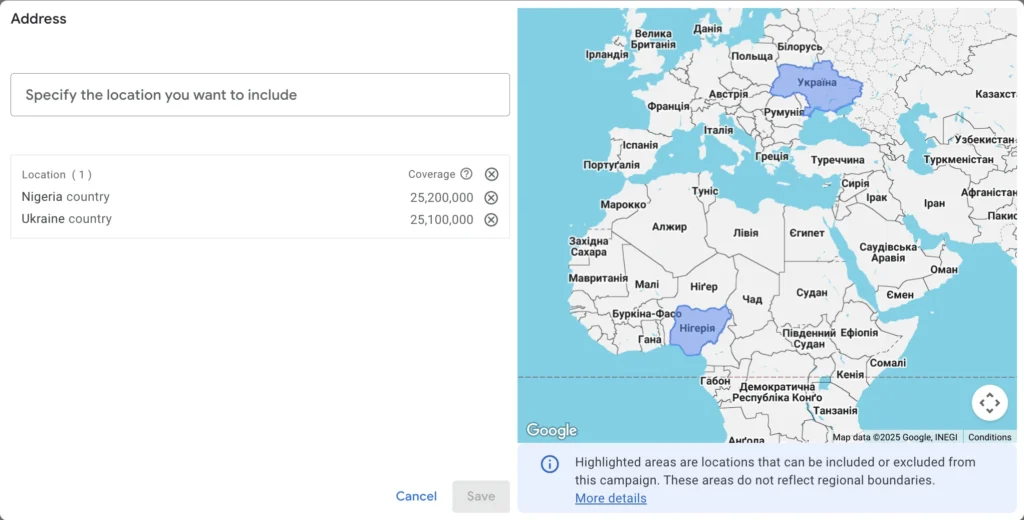
To ground this potential in reality, we analyzed the current commercial search volume for IT services in Nigeria. The results were startling.
Based on our research, the total monthly search volume for core terms like “web development” (around 5,000-10,000 searches/month), “web development company in Nigeria” (around 500) and related services in Nigeria is, remarkably, on par with the search volume in Ukraine.
Let that sink in.
A nation of 220 million people currently has a digital services search market roughly the size of a nation of ~40 million. This isn’t a weakness; it’s the single most compelling indicator of a massive opportunity. It tells us two things:
The Market is Immature: The demand for digitization is enormous, but millions of Nigerian businesses haven’t yet transitioned to finding service providers online. They still rely on word-of-mouth and traditional networks.
The Growth Curve is Imminent: The gap between the demographic potential (220M people) and the current search audience represents explosive future growth. As these businesses come online, the search volume for development services will not just grow—it will multiply.
Getting in now means establishing a brand presence before the market becomes saturated and hyper-competitive. You get to build relationships while others are still waiting for the numbers to catch up.
A Practical Guide to Nigerian Business Culture
Data and market size are one thing; navigating the human element is another. If you plan to do business in Nigeria, understanding the local business culture isn’t just helpful—it’s essential. It’s a landscape where relationships are the primary currency.
Based on our research and experience (which is minimal, and mostly based on our partners’ opinions), here are the key principles:
Trust Before Transaction: Expect the first meeting (or two) to be dedicated almost entirely to building personal rapport. You’ll be asked about your family and well-being, and should ask in return. Rushing into business is seen as rude and will breed suspicion. They want to know who they are working with before they care about what you’re selling.
Respect the Hierarchy: Nigerian society is hierarchical, which translates directly into business. Age and position are highly respected. Always use formal titles (e.g., “Mr.,” “Dr.,” “Chief”) until you are explicitly invited to use a first name. When negotiating, identify and address the senior decision-maker in the room, as their opinion holds the most weight.
Communication is an Art Form: Nigerians often favor a warm and indirect communication style, especially on sensitive topics, to allow everyone to “save face.” However, expect negotiations to be lively and thorough. The preference is overwhelmingly for face-to-face meetings. A phone call might get you an introduction, but important matters are handled in person to gauge trust and seriousness properly.
The Concept of “Nigerian Time”: While you should always be punctual to show respect, don’t be surprised or frustrated if your counterpart is late. This is often called “African time” or “Nigerian time.” Delays due to traffic or other unforeseen circumstances are common. Patience and flexibility are not just virtues; they are strategic assets.
Why is a Web Development Company in Nigeria First? Why Not Jump Straight to AI?
This is a brilliant question from my wife, and it gets to the heart of how technological adoption actually works. It’s tempting to think an emerging market could “leapfrog” foundational tech and go straight to the cutting edge, but that misses a critical point.
AI, in its most valuable commercial form, is not magic; it’s a machine that runs on data.
And where does that data come from?
It comes from the digital infrastructure built by web and mobile development. Think about it:
AI Needs Digitized Processes: You cannot build an AI to optimize logistics until you first have a web portal where shipping orders are placed and tracked. You can’t create an AI-powered credit scoring model until you have a digital lending platform that has processed thousands of loan applications.
AI Needs User Interaction Data: To personalize an e-commerce experience, the AI needs to see what thousands of users are clicking on, searching for, and buying. That all happens on a website or a mobile app.
Infrastructure is the Foundation: A country doesn’t build a high-speed rail network before it has reliable roads. In the same way, a market cannot adopt sophisticated AI solutions without first building the fundamental digital “roads”—the government portals, the business websites, the fintech apps, and the e-commerce platforms.
Web and mobile development is the essential “crawl” and “walk” phase.
Nigeria is currently in this stage — building the core infrastructure to digitize the economy.
Once that foundation is in place and generating massive amounts of clean, structured data, the “run” phase—widespread AI implementation—can truly begin.
A company like ours has the opportunity to get in now and build the foundational systems. The companies that build the infrastructure will be the ones best positioned to introduce AI solutions on top of it in the future.
Deconstructing the Demand: Where Are the Real Opportunities?
My conversation with Eloka opened a door. My research blew it wide open. Here’s where the demand is concentrated for 2025 and beyond.
1. FinTech: The Undisputed King
This is the most mature sector, but it’s far from saturated. With a huge unbanked and underbanked population, the biggest opportunities lie in:
Mobile Payment Solutions: Think simplified payment gateways for SMEs.
Agency Banking Portals: Tools that allow local agents to provide financial services.
Digital Lending Platforms: Micro-loans and credit scoring for individuals and small businesses.
InsureTech: Making insurance accessible and affordable via mobile apps.
2. Government Digital Transformation (Eloka’s Gold Mine)
Eloka was spot on. The government is a massive client. Agencies like the National Information Technology Development Agency (NITDA) are pushing to digitize all government services. This means a colossal need for:
Citizen Portals: For everything from tax filing and business registration to getting a driver’s license.
Internal Management Systems (ERPs): Modernizing the hopelessly outdated internal processes of ministries.
Data Management & Security: Secure platforms for handling sensitive citizen and state data. This is a market that values stability, security, and scale—perfect for established development companies over solo freelancers.
3. E-commerce & Logistics
Jumia and Konga are the local giants, but the market is fragmenting. The real opportunity is in the enabling infrastructure:
Hyper-local Delivery Apps: Connecting local vendors with nearby customers.
Warehouse & Inventory Management Systems: SaaS solutions for the thousands of SMEs moving online.
Specialized E-commerce Platforms: Niche markets like auto parts, pharmaceuticals, or fashion are wide open.
4. PropTech (Real Estate)
My initial guess was also correct. The real estate market is chaotic and largely offline. The demand is for platforms that bring transparency and efficiency:
Property Listing & Management Portals: A more robust, feature-rich Zillow for Nigeria.
Agent & Broker Tools (CRMs): Helping real estate professionals manage their leads and sales.
Virtual Tour & Staging Solutions: Low-code/no-code platforms can excel here, offering quick-to-market solutions.
The Talent Equation: Skill, Cost, and Collaboration
A market is nothing without the talent to serve it. Eloka’s rate of $22.5 – $31/hour is a sweet spot—more affordable than Eastern Europe or Latin America, yet indicative of a developer with solid experience.
The Skillset: The Nigerian developer community is vibrant and skilled in modern stacks. Flutter, React Native, Python (for FinTech), and PHP are extremely popular. Platforms like Flutterflow and low-code solutions are gaining massive traction because they allow for the rapid development of MVPs—something the fast-moving Nigerian market desperately needs.
Local Platforms: While my new contact Eloka focuses on foreign gigs (like many top-tier devs), there are local and regional platforms for finding talent, such as Tunga and Gebeya. However, the real opportunity might be in establishing a physical or official presence to become a magnet for this talent yourself, just as Andela did in its early days.
The Soft Skills: English is the official language, which removes a major communication barrier that often exists with other outsourcing destinations.
Our Verdict: Coderfy’s Next Move?
That conversation on LinkedIn was more than just networking. It was market intelligence.
Nigeria presents a dual opportunity:
A Talent Hub: Access to a deep pool of skilled, English-speaking, and cost-effective developers.
A Greenfield Market: A chance to build products and services for a massive, young, and digitally hungry population in foundational sectors like finance, government, and commerce.
For a company like Coderfy, the strategy is clear. We’re not just looking at Nigeria for outsourcing. We’re considering it a potential market to enter, build for, and establish a representative office serving local and international clients—literally become a web development company in Nigeria, but first, for Nigeria.
The future of tech isn’t just in Silicon Valley or Tallinn. It’s being built right now in places like Lagos. The question is, are you paying attention?

The Coderfy Blueprint: A Platform-Centric Path to National Partnership
Becoming a key technology partner for a nation requires a vision beyond traditional outsourcing or establishing another web development company in Nigeria. It demands a scalable, transparent, and unified system for managing talent, projects, and results.
Our strategy is centered on deploying a sophisticated IT work platform designed to become the central nervous system for a country’s digital transformation.
Phase 1: Build the Ecosystem Core.
– Our entry point isn’t just hiring talent; it’s about establishing a new standard for collaboration.
– We begin by onboarding Nigeria’s top-tier developers and project managers onto our proprietary platform. In parallel, we partner with a respected local consultancy to champion this transparent, streamlined project execution method.
– This initial phase demonstrates a better way to manage and deliver technological projects.Phase 2: Solve a National-Scale Problem.
– We identify one critical, high-visibility challenge—creating a unified portal for citizen services or digitizing a key ministry’s workflow.
– This project serves as the pilot program for our platform, showcasing its ability to manage complex requirements, coordinate between multiple government stakeholders, and provide real-time transparency in a way traditional methods cannot.Phase 3: Engineer a Landmark Case Study.
– The pilot project’s success is a testament to our team and the platform itself.
– The case study will highlight key metrics: reduced timelines, improved budget adherence, and enhanced cross-departmental collaboration, all facilitated by the platform’s unique architecture.
– We prove that this system is the key to de-risking and accelerating critical national projects.Phase 4: Establish the National Standard.
– With a powerful success story, we position our platform as the replicable standard for all future government IT initiatives.
– By deploying it across other ministries, we create an interconnected ecosystem that ensures consistency, security, and interoperability.
– This transforms disparate projects into a cohesive national digital infrastructure, managed through a unified system.Phase 5: Empower Local Stewardship.
– The final, crucial step is establishing “Coderfy Nigeria” not just as a local office of a web development company in Nigeria but as the platform’s national administrator and innovation hub.
– By investing in programs to train thousands of young Nigerians to build and manage projects on our platform, we ensure its longevity and cement its role as the foundational operating system for the nation’s digital future, driven by its own talent.